We use cookies to ensure that we give you the best experience on our website.
Stay Updated with KCVENTS Ventilation & HVAC Solutions
Subscribe to our newsletter for the latest airflow engineering insights, energy-efficient ERV/HRV system updates, and eco-friendly HVAC solutions.
Be the first to receive exclusive technical guides, custom OEM/ODM capabilities, and global exhibition news directly from KCVENTS.
Filter Box for HVAC Air Filtration: Applications, Selection, and Maintenance
How a filter box works, the three filter stages (pre-filter, HEPA, activated carbon), where it fits in an HVAC or ventilation system, how to select one, and how to maintain it.
A filter box is a housing that holds an air filter in an HVAC or ventilation system, so the air passing through is cleaned before it reaches the room — or before it reaches sensitive equipment. A typical filter box combines a pre-filter, a fine filter (such as HEPA), and sometimes an activated carbon stage, so it can handle both particles and odors. This guide explains how a filter box works, where it fits in a system, how to select one, and how to maintain it.
Why a Filter Box Matters in HVAC and Ventilation
The main job of a filter box is to give the filter a sealed, correctly sized home in the airstream. Without a proper housing, air leaks around the filter, unfiltered air bypasses the media, and the filter does not work as rated.
According to the U.S. EPA, people spend about 90% of their time indoors, and concentrations of some indoor pollutants can be two to five times higher than outdoor levels. Source: U.S. EPA, The Inside Story: A Guide to Indoor Air Quality. Ventilation supplies outdoor air, but the air still needs filtration before it enters occupied spaces — that is where a filter box with the right filter media fits in.
A filter box does three jobs in an HVAC system:
Improves indoor air quality. It captures airborne particles such as dust, pollen, and allergens as the air moves through the system.
Protects equipment. Without filtration, dust and debris accumulate on coils, fans, and heat exchangers, reducing heat transfer and shortening equipment life.
Keeps the system efficient. A clean, correctly seated filter maintains airflow; a clogged or bypassing filter raises resistance and increases energy use.
The important boundary: a filter box cleans the air that passes through it. It is not a substitute for source control or for outdoor-air ventilation, and it does not remove every pollutant. It should be part of a complete ventilation design, not a standalone fix.
How a Filter Box Works: The Three Filter Stages
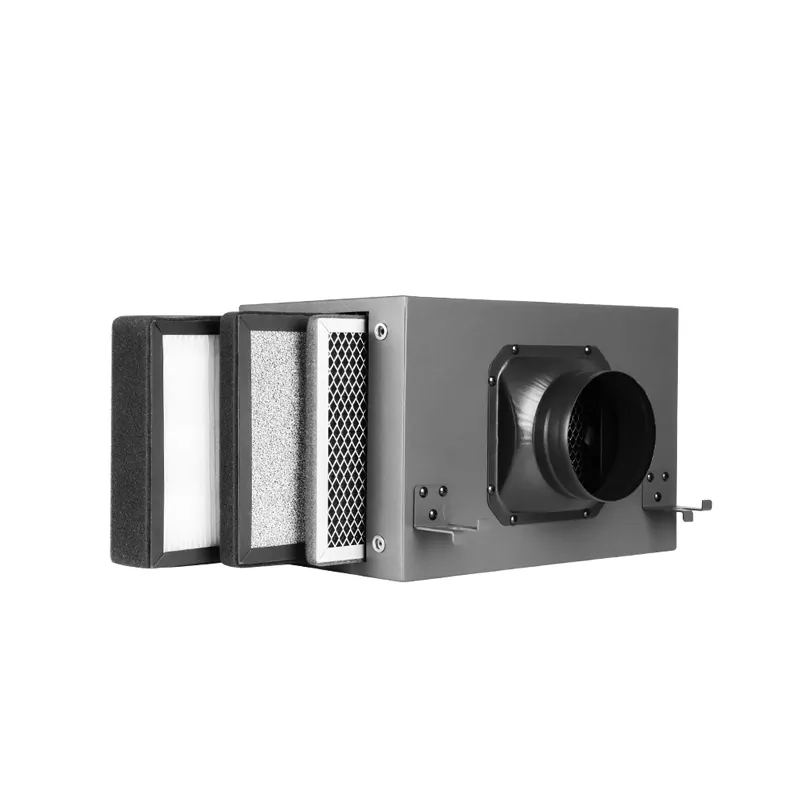
Many filter boxes are built as a 3-layer filtration system, with each stage doing a different job:
Stage
What it removes
Typical media
Replacement
Pre-filter
Large particles: dust, hair, lint
Coarse synthetic or mesh media
Every 1–3 months, or when visibly loaded
Fine filter (HEPA)
Fine particles: PM2.5, pollen, allergens
HEPA or fine pleated media
Every 6–12 months, per manufacturer
Activated carbon
Gases and odors: VOCs, cooking and plant odors
Activated carbon bed
Every 6–12 months, when odor breaks through
Pre-filter is the first line of defense. It protects the finer stages behind it, so the expensive HEPA and carbon media last longer.
HEPA filter captures fine particles. Note that HEPA removes particles, not gases — see the difference between carbon and HEPA below.
Activated carbon adsorbs gases and odors. It does not remove particles, and it cannot be washed and reused once saturated.
Because the three stages do different jobs, a filter box that stages them in series gives broader coverage than any single filter.
Activated Carbon vs HEPA in a Filter Box
A common confusion is thinking “more filters is better” without knowing what each filter does.
Capability
Activated carbon
HEPA
Removes particles (dust, PM2.5, pollen)
No
Yes
Removes gases and odors
Yes (many VOCs and odors)
No
Mechanism
Adsorption onto carbon surface
Mechanical interception
Can be washed and reused
No
No (replace only)
Airflow resistance
Moderate, rises as it saturates
High, rises as it loads
For most spaces you need both: a pre-filter and HEPA for particles, plus carbon if you have odor or gas sources (kitchens, pets, grow rooms, chemical storage). A 3-layer filter box combines them in one housing. See our activated carbon filter guide for how carbon adsorption works and when to replace the carbon stage.
Where a Filter Box Fits in a Ventilation System
A filter box can be placed in several positions, depending on the goal:
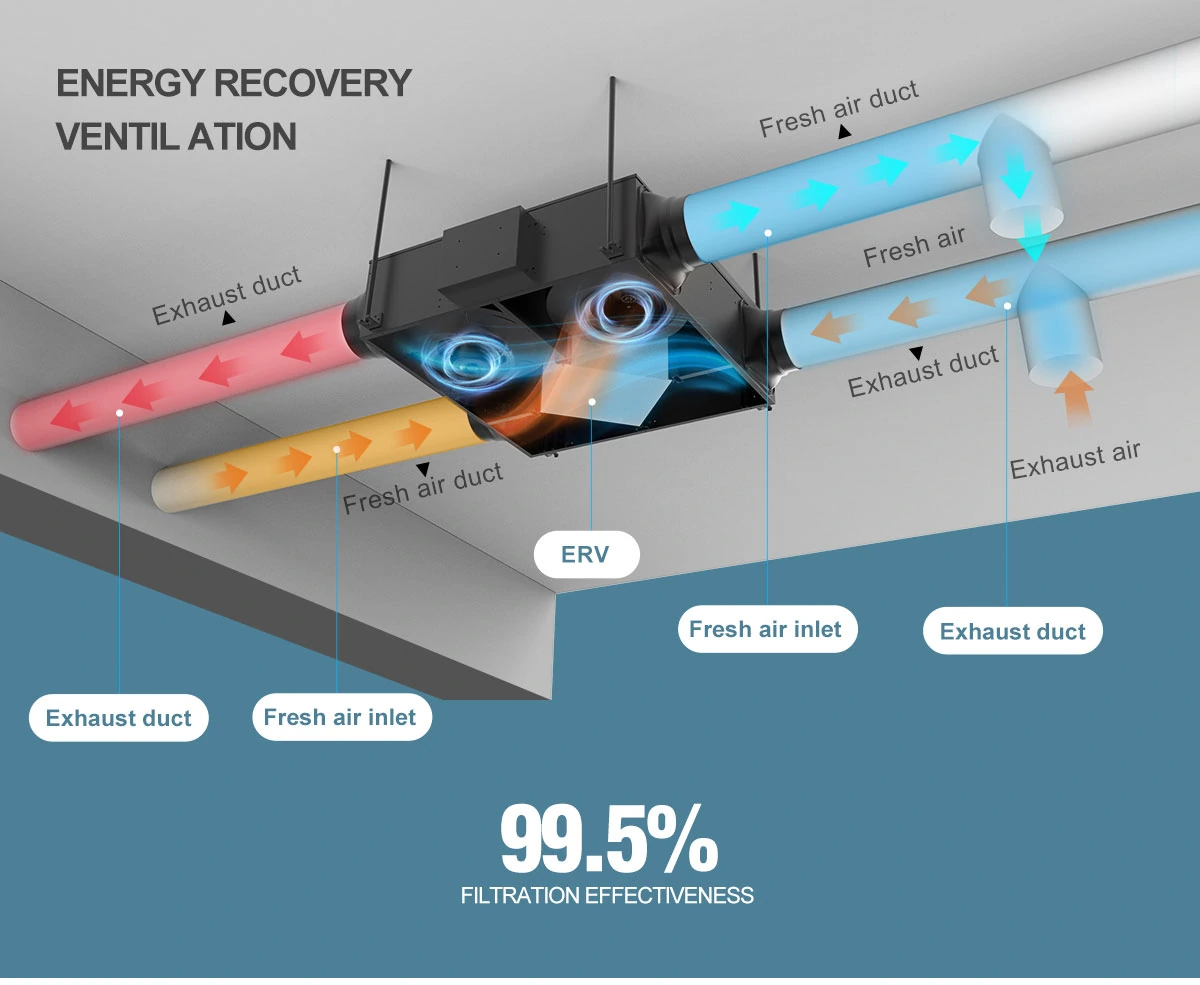
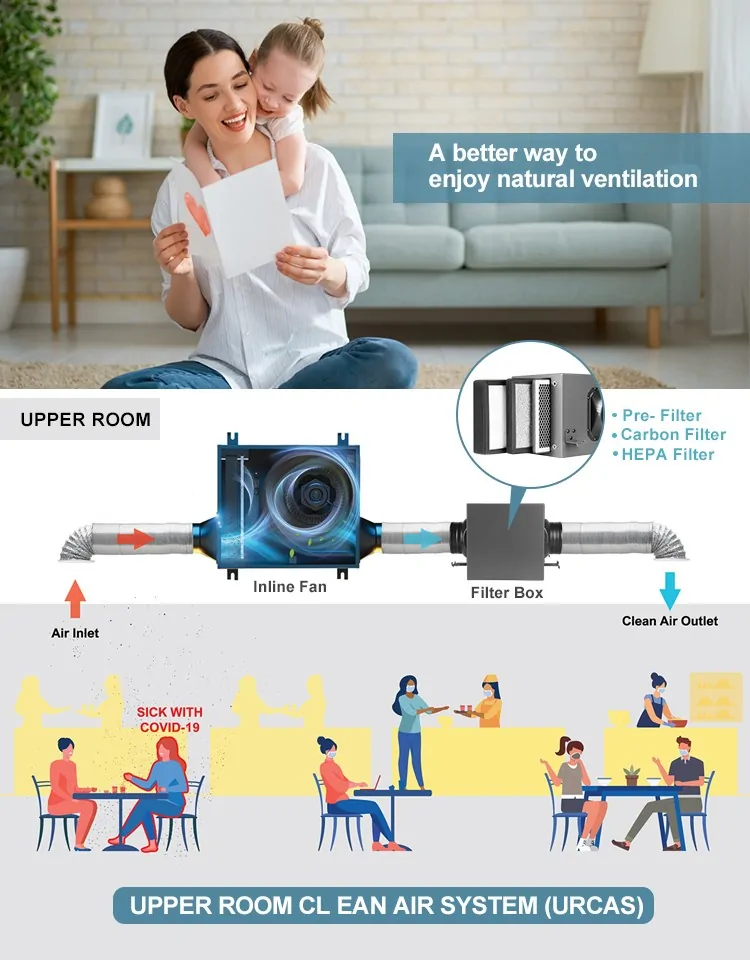
On the fresh-air intake — filters outdoor air before it enters the room; the most common position for ventilation systems.
In the supply duct — cleans air just before the supply grille.
Before sensitive equipment — protects coils, fans, and heat exchangers from dust and debris.
On the exhaust path — with an activated carbon stage, treats odors before air is released (e.g., grow rooms, kitchens).
Typical applications for a filter box:
Fresh air ventilation systems for homes, offices, and classrooms.
HVAC systems where coil fouling is a concern.
Kitchens and food areas where cooking odors need a carbon stage.
Grow rooms and controlled environment agriculture (CEA) where both particles and odors are controlled.
Any space where outdoor air quality is poor (PM2.5, pollen, smoke).
How to Select a Filter Box
Selection is about matching the filter box to the airflow, the duct, and the contamination:
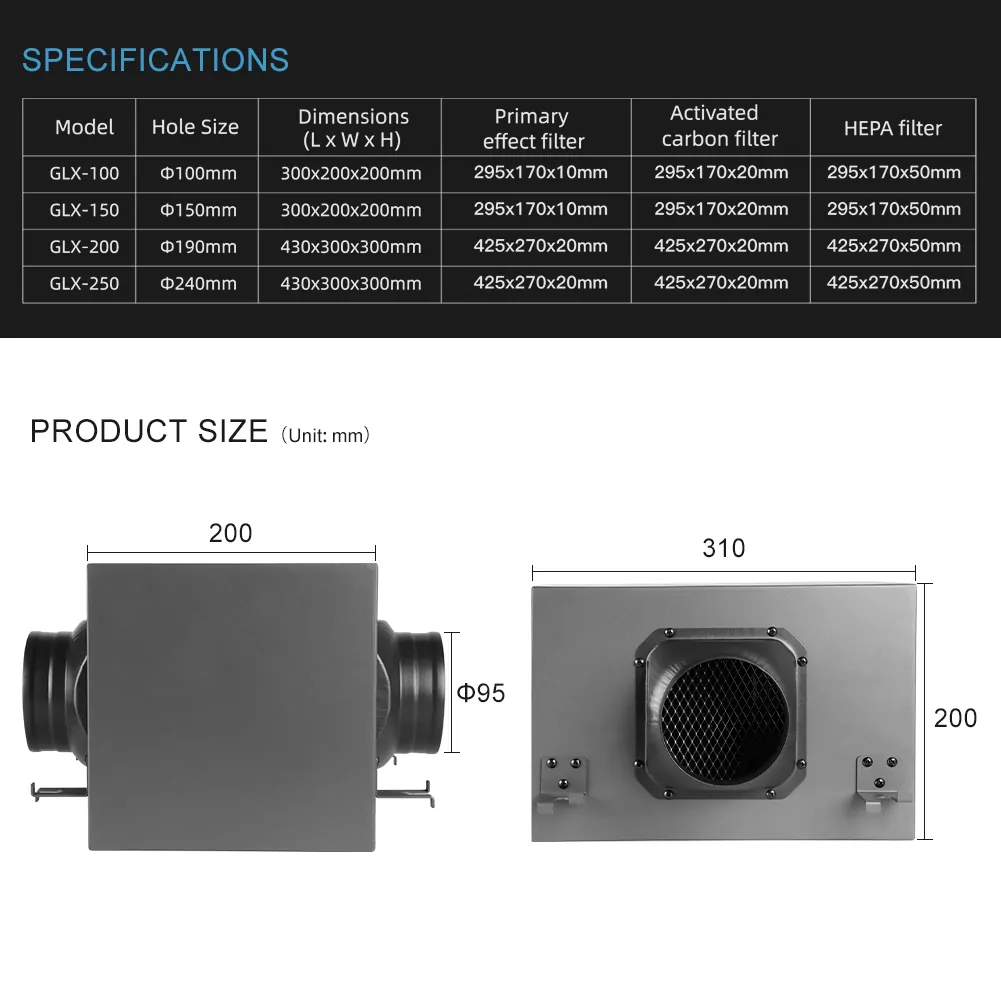
Match the duct and airflow. The filter box opening must match your duct size (e.g., 100 mm, 125 mm, 150 mm, 200 mm) and the fan’s airflow. A filter box rated for lower airflow than your fan adds excessive resistance.
Check pressure drop. Every filter stage adds static pressure. Use the filter’s pressure-drop data at your operating flow, and choose a fan with enough pressure capacity.
Choose the filter stages you need. Particles only → pre-filter + HEPA. Particles + odors → add the carbon stage. Don’t pay for stages you don’t need.
Check the seal. A filter box only works if the filter is sealed inside it. Look for a proper frame or gasket that prevents bypass airflow.
Confirm maintenance access. The box must open easily for filter changes — a filter you can’t reach is a filter that never gets changed.
Verify against the product datasheet. Use only verified specifications (airflow, filter class, pressure drop, dimensions) from the current product data.
Filter box selection checklist
[ ] Duct size and connection match the fan and ducting.
[ ] Airflow at operating static pressure is sufficient for the space.
[ ] Filter stages cover the actual contaminants (particles, odors, or both).
[ ] Filter media and replacement parts are available and affordable.
[ ] The housing seals correctly and allows easy access for maintenance.
[ ] Pressure drop at your airflow is within the fan’s capability.
Filter Box Maintenance
A filter box only performs at its rated level if the filters are replaced on time:
Pre-filter: inspect monthly; replace when visibly loaded (commonly 1–3 months, longer in clean environments).
HEPA/fine filter: replace per manufacturer (commonly 6–12 months). Never wash a HEPA filter.
Activated carbon: replace when odor breaks through (commonly 6–12 months). Washing does not restore adsorption.
Housing and seal: check the gasket and frame annually; a worn seal allows bypass.
Record service dates in a log so you can see the real replacement pattern for your environment.
Q: Does a filter box improve indoor air quality? A: A filter box removes particles (and, with a carbon stage, some gases and odors) from the air that passes through it. It is one part of indoor air quality — ventilation, source control, and humidity control also matter.
Q: What is the difference between a filter box and an air purifier? A: A filter box is a component of an HVAC or ventilation system, installed in the duct or intake to clean air as it flows. An air purifier is a standalone device that recirculates and cleans room air. Many buildings use both.
Q: Do I need a HEPA filter or an activated carbon filter? A: It depends on the contaminants. HEPA removes particles; carbon removes gases and odors. If you have both concerns (for example, dust plus cooking or plant odors), use both in a multi-stage filter box.
Q: How often should I change the filter in a filter box? A: Pre-filters commonly every 1–3 months, fine/HEPA filters every 6–12 months, and carbon when odor breaks through. The right interval depends on the environment — inspect and follow the manufacturer’s instructions.
Q: Can a filter box replace ventilation? A: No. A filter box cleans air that passes through it; it does not supply fresh outdoor air or remove stale air. Ventilation and filtration are complementary, not substitutes.
Q: Does a filter box protect HVAC equipment? A: Yes. By capturing dust and debris before they reach coils, fans, and heat exchangers, filtration reduces coil fouling, maintains heat transfer, and extends equipment life.
Inline Duct Fan — the airflow partner for a ducted filter box
Need a filter box for your HVAC or ventilation project? KCvents manufactures filter boxes, duct fans, and fresh air systems for wholesale, OEM, and private-label buyers. Request a quote with your airflow, duct size, and filtration requirements.
Newsletter Updates
Enter your email address below and subscribe to our newsletter